
Reading Black History
As this year's Black History Month draws to a close, these ten foundational books on the subject remain among BBB's most requested titles, even as institutions sometimes still reject them.

Recently, Books Beyond Bars received a rejection letter for Tip of the Spear by Orisanmi Burton, a book about Black radicalism and prison repression. The book was cited as “presenting a risk to incite disobedience towards law enforcement and prison personnel.” During Black History Month, it feels especially important to reflect on the significance of such judgements. Nearly every month, BBB receives requests for Assata and The Autobiography of Malcolm X, books about incarcerated Black activists who showed a profound understanding of the link between their own incarceration and racism in America. Even decades later, the experiences that these figures were writing about still hold true for incarcerated people in New York, where 14% of residents are Black, yet make up 49% of the state’s prison population.
This Black History Month, we decided to compile a list of our most requested Black history books. One of our aims is to give incarcerated people a small measure of autonomy by trying to send them, if possible, the exact book they requested.
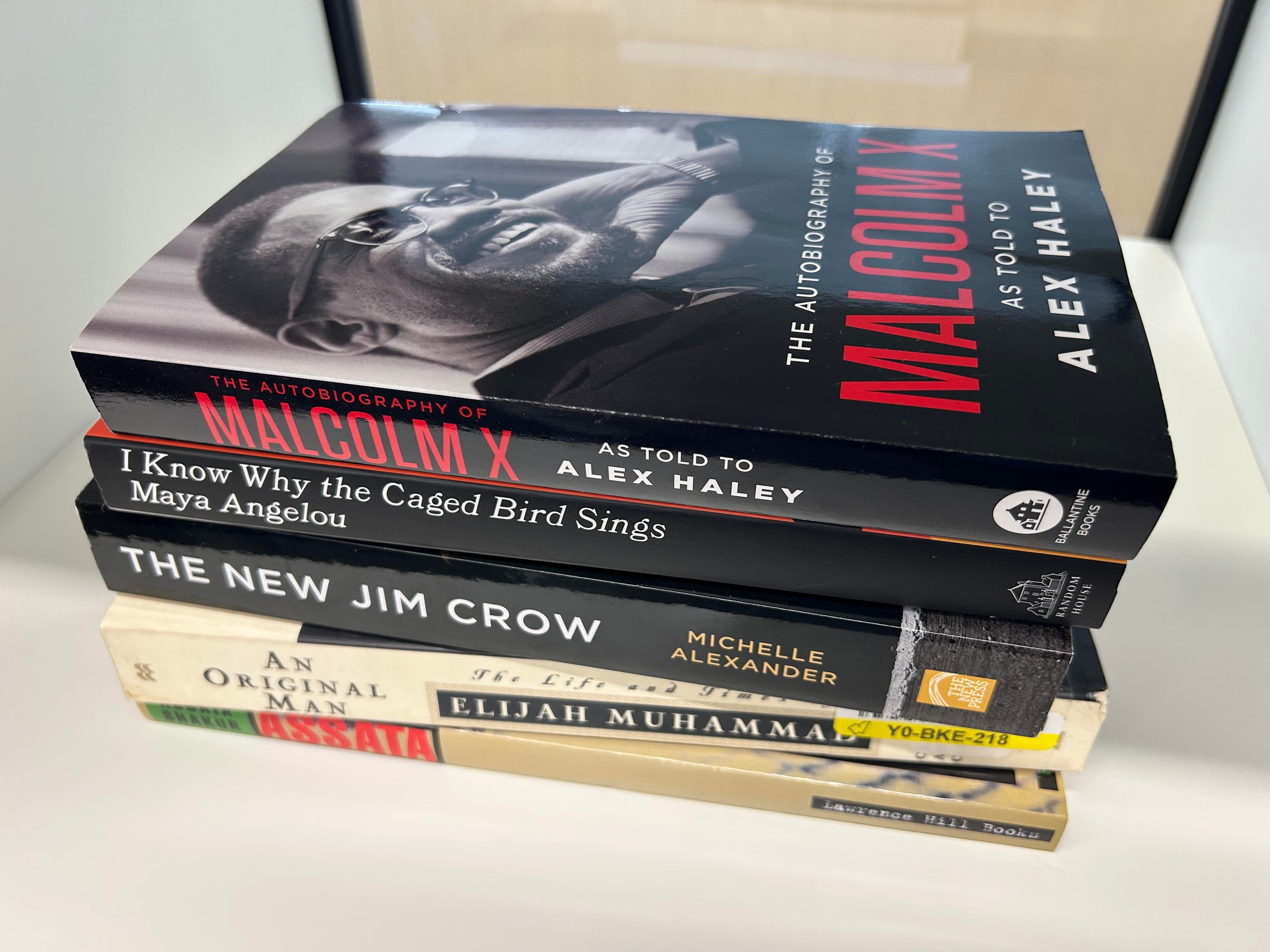
The Autobiography of Malcolm X: As Told to Alex Haley (Grove Press, 1965)
The autobiography of the legendary civil rights leader characterized by US authorities as the most dangerous man in America is a fixture on Time’s Ten Most Important Nonfiction Books of the Century. Malcolm X, the Muslim leader and activist, tells the remarkable story of his life and the Black Muslim movement to writer and journalist Alex Haley, the resultant account standing as the definitive statement of a movement and best characterization of a man whose message still resonates.
Assata Shakuer and Angela Davis, Assata: An Autobiography (Lawrence Hills Books, 2001)
This autobiography tells the story of Black Panther Assata Shakur (aka JoAnne Chesimard). Long a target of J. Edgar Hoover’s campaign to infiltrate and criminalize Black nationalist organizations, Shakur was incarcerated for four years prior to her conviction on flimsy evidence in 1977 as an accomplice to murder. Shakur recounts the experiences that led her to a life of activism and portrays the progress and eventual demise of revolutionary groups at the hand of government.
Mumia Abu-Jamal and Marc Lamont Hill, The Classroom and the Cell: Conversations on Black Life in America (Third World Press, 2012)
This complex and moving book is a collection of intense and passionate conversations between Dr. Marc Lamont Hill, author, Columbia University professor, and host of “Our World with Black Enterprise,” and Mumia Abu-Jamal, a famed political prisoner, about the forces impacting their lives as African American men. Ranging over race, politics, hip-hop culture, education, mass incarceration, and love, the pair’s discussions direct attention to some of the most pressing issues in contemporary African American life.
Carter Godwin Woodson, The Mis-Education of the Negro (The Associated Publishers, 1933)
Carter Godwin Woodson’s historical text aims to expose the racist underpinnings of American education. Woodson (1875–1950) was an African American historian, journalist, and the founder of the Association for the Study of African American Life and History. He was one of the first scholars of African American history and a founder of The Journal of Negro History. In February 1926 he announced the celebration of “Negro History Week,” the precursor of Black History Month.
Michelle Alexander, The New Jim Crow: Mass Incarceration in the Age of Colorblindness (The New Press, 2010)
“It is in no small part thanks to Alexander’s account,” writes Adam Schatz, “that civil rights organizations such as Black Lives Matter have focused so much of their energy on the criminal justice system.” Since its 2010 publication, The New Jim Crow has continued to have an enormous impact; having been cited in judicial decisions and won prizes including the NAACP Image Award, it spawned a whole generation of criminal justice reform activists and organizations.
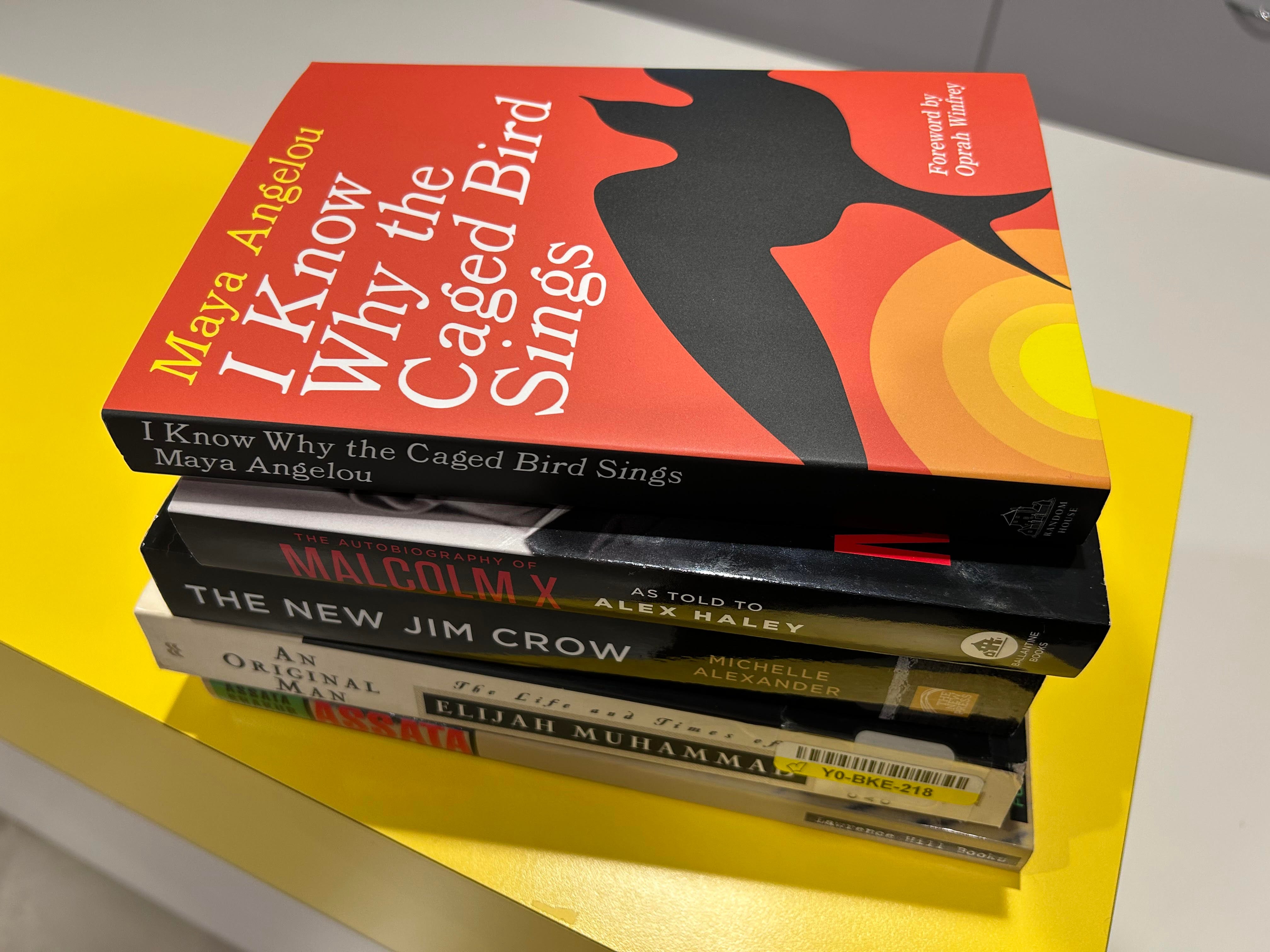
Elijah Muhammad, Message to the Blackman in America (1965)
An inspiration to Malcolm X and Louis Farrakhan, the controversial Nation of Islam leader Elijah Muhammad compares the concept of God to nature and mathematics, and explores the origins of humanity, the devil, heaven and hell with particular concern for the African American experience. The book, which was used as a reference in the overturning of Muhammad Ali’s conviction for draft evasion, is often seen today as a diametric response to the experience of racism.
Robin Bernstein, Freeman’s Challenge: The Murder That Shook America’s Original Prison for Profit (University of Chicago Press, 2024)
In the early nineteenth century, as slavery gradually ended in the North, the village of Auburn in New York state invented a new form of unfreedom: the profit-driven prison, leasing “slaves of the state” to private companies until an Afro-Native teenager named William Freeman challenged the system. In Freeman’s Challenge, Robin Bernstein tells Freeman’s complex story and examines its lingering aftereffects. An explosive story about the entangled origins of prison for profit and anti-Black racism.
James Baldwin, The Fire Next Time (Dial Press, 1963)
James Baldwin’s classic testament galvanized the nation, gave voice to the emerging civil rights movement in the 1960s, and still lights the way to understanding race in America today. At once a powerful evocation of the author’s early life in Harlem and a disturbing examination of the consequences of racial injustice, this brilliant book is an intensely personal and provocative document that exhorts Americans, both black and white, to attack the terrible legacy of racism.
Derrick Bell, Faces at the Bottom of the Well: The Permanence of Racism (Basic Books, 2018)
In this groundbreaking and prophetic work, civil rights activist and legal scholar Derrick Bell argues that racism is an integral part of American society. African American struggles for equality are doomed to fail, he writes, so long as the majority of whites do not see their own well-being threatened by the status quo. This classic book was a pioneering contribution to critical race theory and remains urgent and essential reading on racism in America.
John Henrik Clarke, Christopher Columbus and the Afrikan Holocaust: Slavery and the Rise of European Capitalism (Eworld Inc., 2011)
Clarke challenges traditional accounts of precolonial Africa and argues that Columbus established a global system of Euro-American domination centered on the exploitation of indigenous peoples. His book offers readers new perspectives on African and Black American history, focusing on sparking change through education and community building. “We have to realize it is not the effort of any one of us that will lead to freedom,” he concludes, “but the collective work of all of us.”